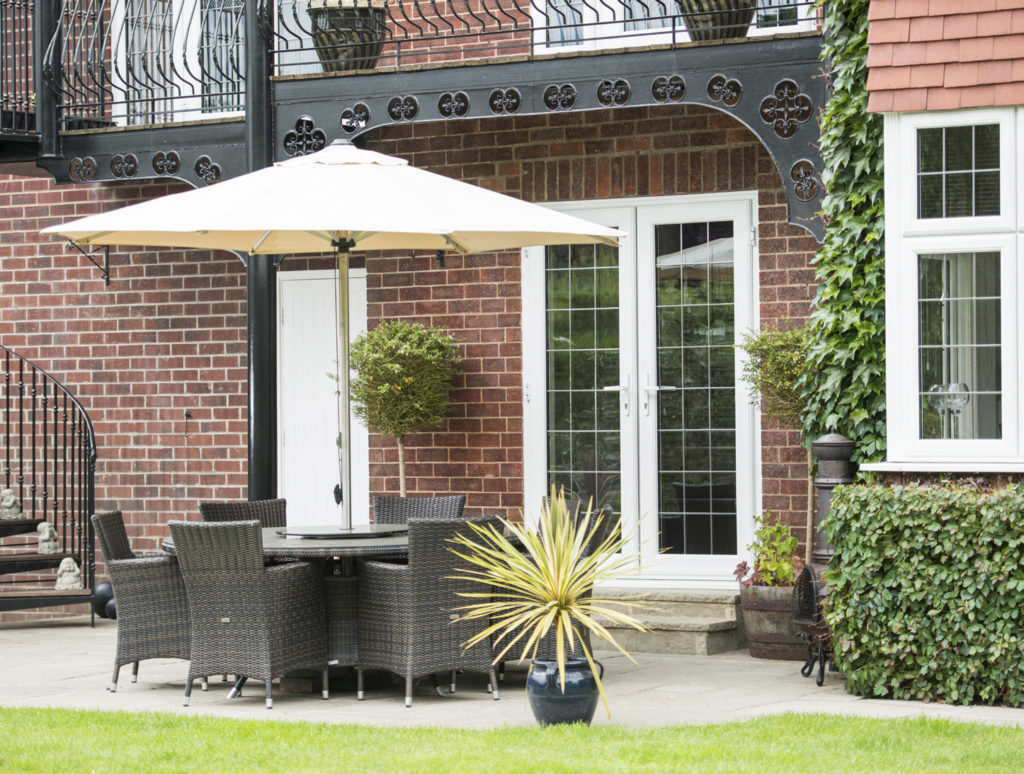
What we call French doors trace back to Renaissance Europe. Architects and builders in Italy and France wanted larger glazed openings to bring more light and air into rooms. They designed tall windows you could open and step through onto a balcony. The name “French” stuck because the style became especially associated with French domestic and palace architecture.
During the 18th and 19th centuries, glazed French-style doors were common in grand houses and terraces with balconies or rear gardens
As glass production improved and the middle classes grew, versions of French doors filtered into more modest homes. Details changed with fashion: panels, glazing bars, fanlights and decorative glazing were adapted so French doors could complement Victorian ornament or the simpler lines of Edwardian suburban homes).
The mid-20th century brought architectural modernism and new door/window types. In the UK the mass-market take up of glazed external doors was slow until the post-war and late-20th century housing and materials revolutions. The 1970s–1980s saw a big change: the double-glazing boom and the arrival of aluminium and then uPVC door systems made glazed external doors more affordable, thermally efficient and low maintenance. This helped French-style doors move into mainstream home improvements.
uPVC made glazed doors cheap, energy-efficient and durable without the maintenance needed for timber. uPVC French doors let homeowners replace old timber backdoors with full-height glazed doors that sealed better against heat loss and drafts.